Visoko fishing family(1954) 1959-2009
People have been fishing since ancient times. At first, of course, only for food and survival. In our country, bridge fishermen are known as good fishermen. Fishing methods and techniques were primitive in the beginning, and therefore often unsuccessful, but later they were improved and became increasingly successful. With the emergence of civilization, fishing has always been associated with the right to fish. In feudalism, this usually belonged to the lords of the manor and the church. With the emergence of the bourgeoisie, commercial fishing became established. Fishing guilds were established, when fishing rules and restrictions were also set for the first time. In Slovenia, the Trnovo Fishing Association was established in the 17th century, which connected professional fishermen. Valvasor’s writings about Lake Cerknica and fishing in it are also known. Sport fishing appeared only later. With this form of fishing, we are primarily talking about a form of recreation by the water, associated with knowledge of fishing techniques, fish habits and observation of life in and around the water. The purpose of sport fishing is to limit the use of fishing techniques and bait for a particular species of fish in a particular watercourse. In this way, we make it more difficult for the fisherman to catch fish or give the fish a greater chance to escape. The beginning of sport fishing in our country is associated with Professor Ivan Franke, who is considered one of the famous people of Poljane.
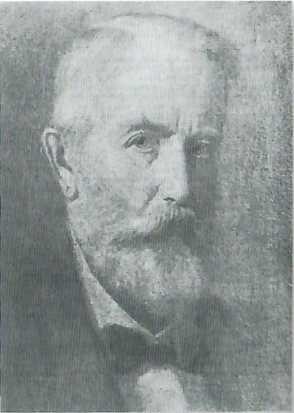
He was born in 1841 in Dobje pri Poljanah, where our Fishing Family also takes care of the memorial plaque on his birthplace. He was also known as a painter, our first fish farmer and an enthusiastic sports fisherman. He was also an excellent fly fisherman and artificial fly tyer. He fished and knew almost all the waters in Carniola. He was also often on the Poljanska Sora, as the then leaseholder of Poljanščica, the writer Ivan Tavčar, was an acquaintance of his. In 1880, the first fishing association of sport fishermen in Carniola was founded in Ljubljana. At that time, the association began to think for the first time about the need to invest in the waters and not just fish. Professor Franke also prepared the basis for the first fishing law for the Duchy of Carniola, which was signed by Emperor Franz Joseph in 1888. At that time, the waters in Carniola were divided into districts. Leasing for individual districts was in effect. It was not until 1937 that this law was extended to the entire territory of Slovenia. After the Second World War, the authorities at the time divided the waters into 13 fishing units, which were managed by fishing cooperatives. These caught fish and sold them on the market and took care of stocking. Sport fishermen were also members and could fish in the entire area. In 1954, a new fishing law was passed, which finally abolished leasing and the implementation of commercial fishing. It laid the foundation for the establishment of fishing families, which were given fishing areas and districts to manage without compensation. There was a transitional period until 1958, when amendments to the law finally abolished fishing cooperatives and transformed them into Associations of Fishing Families. Since then, fishing families have managed their area independently. In 1976, a new law on freshwater fisheries was passed. The law divides freshwater into closed and open waters. Aquatic animals in open waters are part of the animal world in the human environment and are state property under special protection. In open waters, only sport fishing is permitted within the framework of the Sport Fishing Regulations of 1981, the Ordinance on Protection Periods and Minimum Fish Sizes of 1993, and the Ordinance on the Protection of Endangered Animal Species of 1993. The latest Act on Freshwater Fisheries was adopted in 2006, which, among other things, stipulates that the association of fishing families in fishing family associations is no longer mandatory, but can only be a voluntary form of association. In total, there are around 13,500 ha of open freshwater in Slovenia. 12,200 ha are managed by 62 fishing families, which are united in nine regional Fishing Family Associations. 1,300 ha of designated protected waters are managed by the Fisheries Institute in Ljubljana, which also maintains a fisheries cadastre or census and fishing statistics for all fishing waters in Slovenia.
Establishment and organization of the Visoko fishing family
The area that is currently managed by the Visoko Fishing Family was previously defined as district 16b, which was part of the Škofja Loka fishing district. Before World War II, the district was managed by various lessees. Among the lessees was our famous writer Ivan Tavčar, who managed the district in an exemplary manner until his death in 1923. He had an organized guard service, issued fishing rights to several fishermen, which he took away when they violated fishing rules. After him, his son took over the lease and kept it until the end of the war. After the war, the district was managed by the Ljubljana Fishing Cooperative in accordance with the legislation of the time. On May 9, 1954, the founding general assembly of the Poljane Fishing Family for fishing districts 16a and 16b was held. It was attended by 8 members for district 16a (now RD Žiri) and 5 members for district 16b (RD Poljane, now RD Visoko). The following year, the fishermen from Žirovo established their own fishing community for district 16a, while the Poljanskis continued their work in the already established Poljane Fishing Community in district 16b.
The founding members of our RD were
- Jože Tavčar, president and owner,
- Dr. Kristijan Derganc,
- Ivan Kovač,
- Tone Mlakar,
- Jože Sturm
It should be noted that until 1959, some members of the Ljubljana Fishing Association were also able to fish in this district, that is, until the time when legal amendments abolished fishing cooperatives and replaced them with associations of fishing families. At that time, members of fishing cooperatives were divided and joined various fishing families.
Membership in our RD, which was then called the Poljane District Fishing Family, increased to 19 members. Since that year, on December 24, our family has also been entered in the register of associations of the municipality of Škofja Loka, based on the ordinance of the Škofja Loka Municipality No. 03-1817/1—59, dated 24/12- 1959. We took this decree and date as a milestone and the beginning of the organized activities of our fishing family. Two years later, our family already had 25 members. It received its current name in 1968, when it was renamed the Visoko Fishing Family, and had 39 members. The management of the family was in the hands of the elected members of the executive committee, and primarily the president, the master, the secretary and the treasurer.